Fire alarms
Detection and alarm systems designed, installed, commissioned and maintained — and reviewed in-house before anyone picks up a tool.
- Scope
- Design, supply and installation
- Commissioning and handover documentation
- Annual and periodic testing to NZS 4512
- Fault-finding and false-alarm diagnosis
- Device replacement programmes on occupied sites
- Standards
- NZS 4512
Detection is the part that has to work first
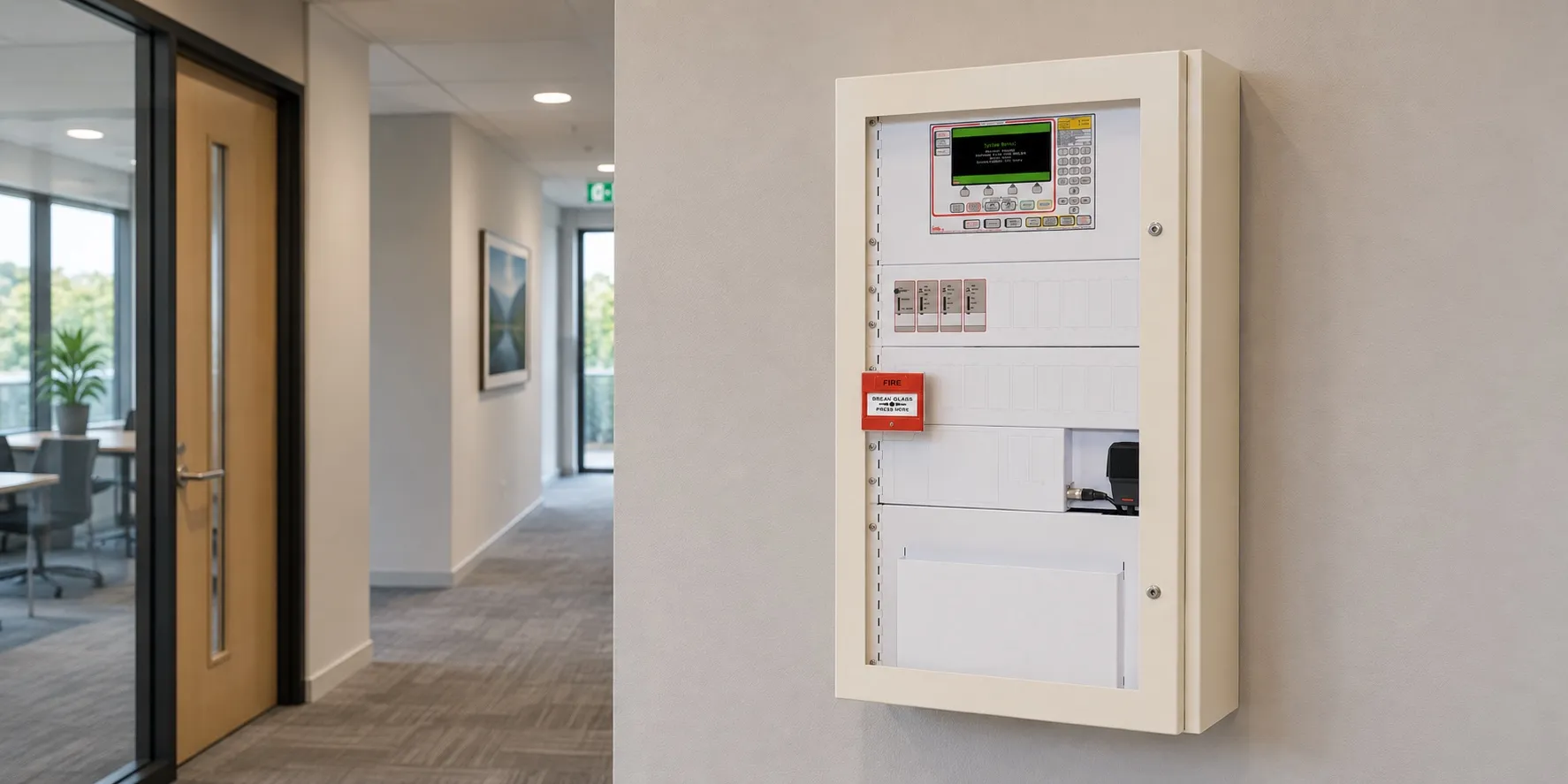
Every other system in a building waits for the alarm to tell it something. Suppression, door releases, smoke control, evacuation — all of it is downstream of detection. A system that is late, or that cries wolf until people stop believing it, has already failed before anything else gets a chance to.
Design reviewed before installation, not after
Our technicians are supported by technical staff who review every design for quality and integrity before it is built. That review is not a formality. The commonest expensive faults we are called to fix on other people’s systems are design faults — the wrong detector type for the environment, coverage that ignores how air actually moves through a space, a loop loaded to the edge of its capacity with no room to extend.
Correcting those after commissioning costs several times what getting them right at design stage would have.
Installed to the same standard it was designed to
Two things decide the working life of an alarm system: the quality of the installation and the discipline of the maintenance after it. We do the electrical and mechanical installation for the systems we design, so there is no gap between what was specified and what was built, and no argument later about which of those two the fault belongs to.
Replacement on a building that cannot close
Most upgrade work happens in buildings that stay open. That makes the sequencing the hard part rather than the wiring — which zones come out, when, for how long, and what compensating measures hold while they are down. We do this at scale, including full site fire system upgrades across the SkyCity precinct in Auckland.
Common questions
Which specified system is a fire alarm?
Automatic and manual emergency warning systems are SS2 on a compliance schedule. Related items often sit alongside it — SS3 for doors that close on alarm activation, SS14 for emergency power and signage, and SS15 for other fire safety features that form part of the means of escape.
How often does a fire alarm have to be tested?
Your compliance schedule sets the inspection, maintenance and reporting procedures for your building, and the frequency comes from there rather than from a single national rule. In practice most systems carry a monthly owner's check alongside more detailed periodic testing.
We get constant false alarms. Is that normal?
No. Repeated unwanted activations usually point at a cause — detector type wrong for the environment, contamination, a failing device, or a design that never suited the space. It is a fixable problem, not a cost of ownership.