Fire sprinklers and suppression
Water, gaseous, foam, mist and deluge. What you are protecting decides which one, and the wrong agent can cost more than the fire.
- Scope
- Automatic sprinkler systems
- Gaseous and clean-agent suppression
- Commercial kitchen suppression
- Foam systems
- Water mist and high-speed deluge
- Riser mains and brigade inlets
- Standards
- NZS 4541NZS 4515
The question is what you are protecting
There is no single best suppression system. There is only the right one for what is in the room, and the difference between them is not a matter of budget — it is a matter of what the agent does to the thing you are trying to save.
Water is unmatched at absorbing heat, and for most buildings it is the correct answer. For a room full of servers, water finishes the job the fire started.
Automatic sprinklers
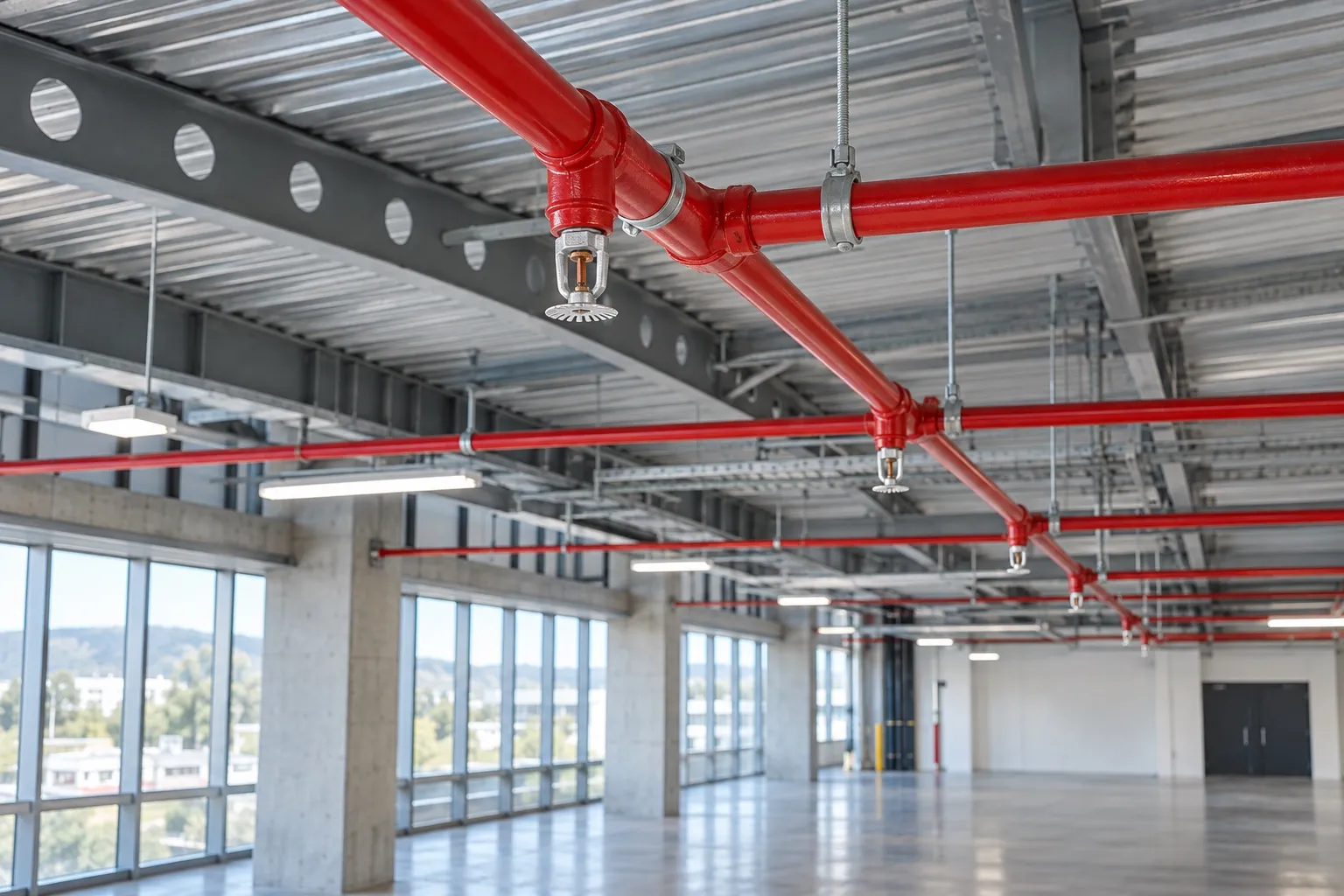
The most reliable fire protection ever devised, and the most misunderstood. Only the heads directly over the fire operate. Most fires that reach a sprinkler are controlled by one or two heads, long before the brigade arrives, and the building stays standing.
We design, install and maintain sprinkler systems for commercial and industrial buildings, and residential-type sleeping occupancies where the standard and the design objective are different again.
Gaseous and clean agent
For enclosed spaces holding assets that cannot tolerate water. Clean agents work either by reducing oxygen below the level that sustains combustion, or by absorbing heat and breaking the chemical chain reaction. Typical applications are telecommunications facilities, clean rooms, data processing centres and collections.
Ask four questions. Would water or dry chemical damage the equipment? Is the equipment hard to replace? Do people occupy the space? Can the business tolerate the downtime? If the answer to any of those is yes, a clean agent system is worth costing.
Commercial kitchens
Modern kitchens are harder to extinguish than they used to be. Healthier vegetable oils have lower auto-ignition temperatures, and better-insulated appliances hold heat long after the flame is out — which is exactly how a kitchen fire reignites.
Wet chemical and water mist systems put discharge nozzles across the appliance line and the full length of the hood, with heat detection behind the filters. They are fully automatic, need no power to operate, and protect the hood around the clock.
Foam, mist and deluge
Foam is for flammable liquids — it cools the fire and seals the fuel surface from oxygen. Water mist produces a specific droplet size and velocity: larger droplets carry enough momentum to punch through the fire plume and cool the fuel, smaller ones flash to steam at the flame front and displace oxygen. High-speed deluge detects a spark or ember in a material transport duct and suppresses it in under 300 milliseconds — fast enough to matter where product moves at 25 metres a second and a single ember becomes an explosion.
Common questions
Sprinklers will damage everything, won't they?
Only the heads over the fire operate, not the whole system — the image of every head opening at once comes from films, not from installed systems. Where water genuinely is the problem, gaseous or mist suppression exists precisely for that reason.
What is a clean agent system for?
Enclosed spaces holding high-value or irreplaceable assets that water would destroy — server and comms rooms, data processing, control rooms, archives and museum collections. The agent either displaces oxygen or absorbs heat to break the combustion reaction, and leaves nothing to clean up.
Does a sprinkler system remove the need for an evacuation scheme?
Sometimes, but only if three conditions are all met, and owners routinely miss the third. See our guide to evacuation schemes for the detail.