Fire equipment
Extinguishers, blankets and hose reels — the first response, in the right place, in working order, with the right agent for the risk.
- Scope
- Extinguisher supply, siting and annual certification
- Fire blankets
- Fire hose reels
- Life-cycle testing and replacement
- Advice on the right agent for each risk
- Standards
- NZS 4503NZS 3504
The first ninety seconds
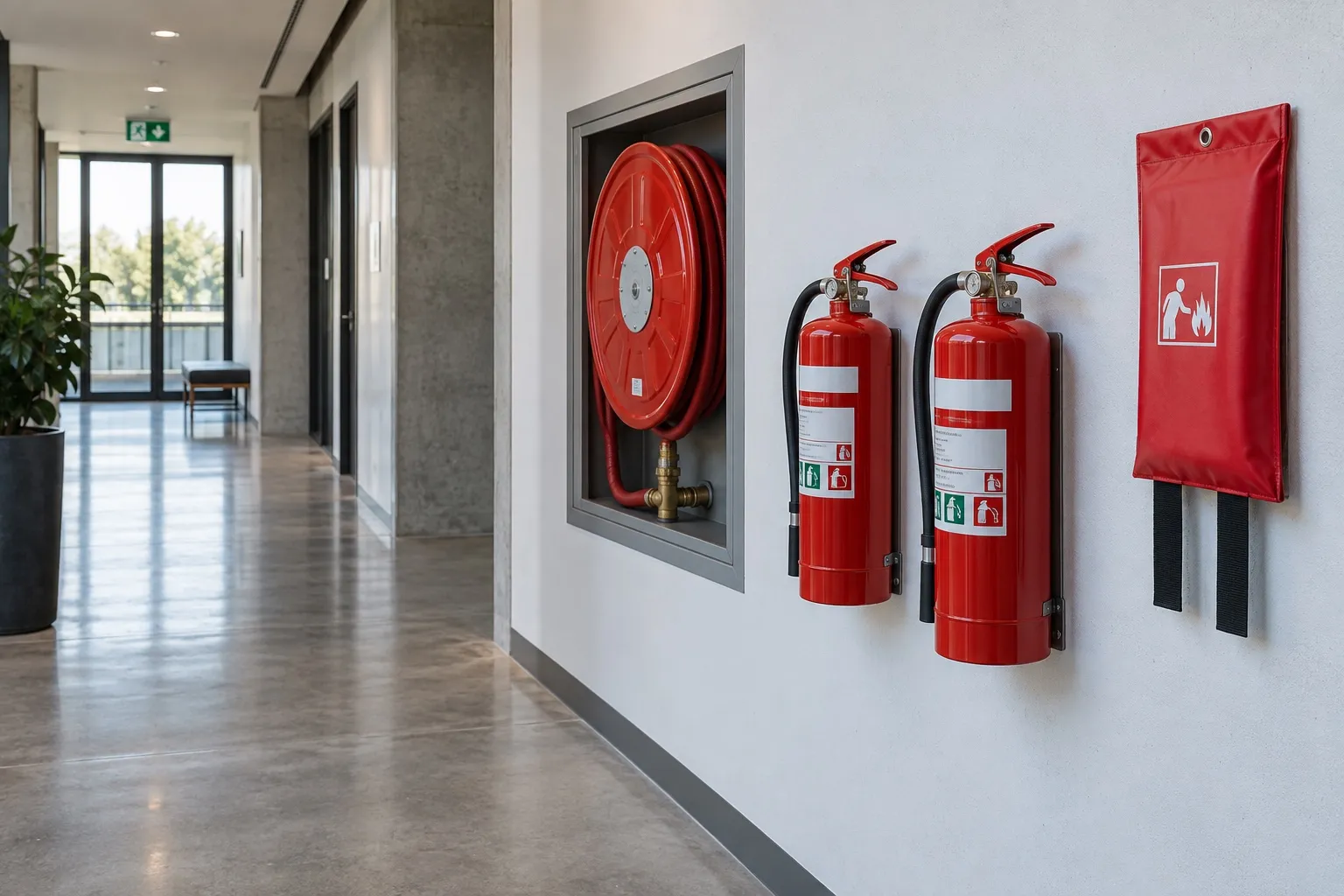
Most fires that get put out are put out by whoever was standing there, with whatever was on the wall, before anyone arrived with a truck. That makes the equipment on your walls a genuine line of defence rather than a box-ticking exercise — but only if it is the right type, in the right place, and it works when the pin comes out.
Insurers know this, which is why most of them ask.
Extinguishers
Not all extinguishers are equivalent, and the differences matter more than the colour coding suggests. A kitchen with oils and fats needs wet chemical. That same extinguisher used on an electrical fire is dangerous.
We assess what is actually in your building — the processes, the plant, the stored materials — and specify accordingly, then site the units where someone will find them under stress rather than where the wall was convenient. Annual certification and life-cycle testing follow.
Our Which Extinguisher Is Right for Me? guide covers the classes in plain language.
Fire blankets
Ideal where small Class F fires are a risk: kitchens, and anywhere oils or fats are present. A blanket smothers the fire and cuts off its oxygen. It can also be used on a person whose clothing has caught.
Cover the burning material, leave no gap for oxygen, cut the power or fuel supply, call the fire service, and leave it covered for at least thirty minutes so the material cools.
Then throw it away. All our fire blankets comply with NZS 3504, and none of them are reusable.
Hose reels
A first-responder tool with two failure modes that have nothing to do with the hardware: nobody knows how to use it, and it is not where it needs to be.
Our hose reels deliver a minimum of 0.33 litres per second and comply with the requirements of the New Zealand Building Code. Sited correctly, a hose reel holds a fire at bay until the brigade arrives — which is often the difference between a damaged building and no building.
Common questions
Does fire equipment go on my compliance schedule?
Usually not. Hand-operated firefighting equipment is generally not a specified system in its own right, so it does not normally carry a Form 12A. It is still required under the Building Code, still required by most insurers, and still has to be maintained — the obligation just comes from a different direction.
Can one extinguisher cover everything?
No, and assuming so is dangerous. A wet chemical extinguisher is right for cooking oils and fats and hazardous on an electrical fire. Getting the agent wrong can make a fire worse rather than better.
Can a fire blanket be reused?
Never. A fire blanket is a single-use item and must be disposed of and replaced after any use. If you are one of our customers, call us and we will courier a replacement the same day.